Should Marketing and Transactional Email Use Different Subdomains?
Your checkout sends receipts from notify@yourbrand.com. Your newsletter leaves from hello@yourbrand.com. Both pass SPF today. That does not mean they should stay on the same reputation bucket forever.
Marketing and transactional mail fail for different reasons. Campaigns fail on list quality, frequency, and content signals. Transactional mail fails when auth drifts or when the domain inherits someone else’s bulk mistakes. Splitting streams onto subdomains is the usual way solo senders and small teams keep the second problem from becoming the first.
Should marketing and transactional email use different subdomains?
Usually yes, once you send both types at meaningful volume.
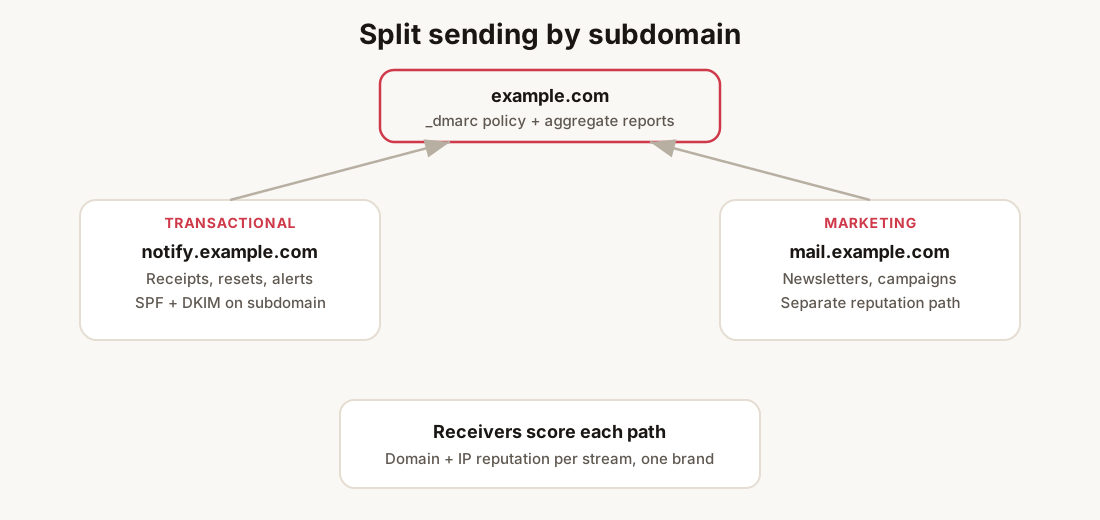
A subdomain split does not magically fix bad lists or weak authentication. It isolates reputation: complaints and bulk engagement scores accumulate on mail.example.com while password resets on notify.example.com keep a cleaner history.
You still own one brand. Receivers still connect the organizational domain. What changes is which hostname carries which risk.
Stay on one domain when:
- You send only transactional mail, or only occasional marketing to a tiny list.
- You have one ESP, one sending path, and DMARC reports show a single stable source for months.
- You are still in setup and have not published complete SPF and DKIM everywhere yet. Fix auth before you multiply zones.
Split when:
- Marketing goes through Klaviyo, Mailchimp, or similar while product mail uses SES, Postmark, or workspace SMTP.
- Campaign volume is large enough to hit Gmail bulk rules while receipts must land in the primary tab every time.
- You already saw receipts slow down after a heavy promo week.
What is the difference between marketing and transactional email?
Transactional mail is triggered by a user action: order confirmation, shipping update, password reset, billing receipt, login code. Recipients expect it. Unsubscribe rules for bulk mail often do not apply the same way, but the message still must authenticate and must not look like a disguised promotion.
Marketing mail is broadcast or sequenced: newsletters, launches, nurture drips, cold outreach. It is permission-based (or should be), complaint-sensitive, and subject to one-click unsubscribe requirements at Gmail and Yahoo when volume qualifies.
The technical pipeline treats them similarly at SMTP time: SPF, DKIM, DMARC, IP and domain reputation all still apply. The policy and risk profile differ. Mixing promotional blocks into a receipt template is a common way to turn transactional mail into bulk in the eyes of filters.
| Signal | Transactional | Marketing |
|---|---|---|
| Typical volume | Low, spiky per user | High, batched |
| Complaint sensitivity | Low if expected | High |
| Content | Account facts, links to your app | Offers, tracking, images |
| Gmail bulk rules | Usually below threshold | Often in scope |
| Ideal reputation | Stable, boring | Can tolerate Promotions tab |
Why use a subdomain for marketing email?
Three practical reasons:
- Reputation firewall. A spike in spam complaints on campaigns does not attach directly to the subdomain that sends invoices.
- SPF lookup budget. Each sending platform adds
include:mechanisms. Putting the ESP onmail.example.comkeeps the root domain record smaller. When includes stack up, see SPF lookup limits. - Operational clarity. DMARC aggregate reports become readable when sources group by subdomain:
mailfor the ESP,notifyfor transactional.
Marketing subdomains also make it obvious in the inbox when mail is bulk: hello@mail.yourbrand.com sets expectations.
Common names: mail, news, marketing, campaigns. Pick one, document it, and point the ESP’s return-path and DKIM selector at that hostname.
Can transactional and marketing email share the same domain?
Yes, and many teams do for years without pain, especially under a few thousand recipients.
Shared-domain problems show up as patterns, not instant failures:
- Receipts start landing in Promotions after you reuse the same From local-part as the newsletter.
- DMARC passes on the ESP path but alignment breaks on workspace mail because the envelope domain differs.
- One platform’s dedicated IP misbehaves and everything on that domain soft-fails at Yahoo.
If you stay shared, separate From addresses, envelope domains, and templates aggressively. Never send campaigns through the transactional provider’s domain without its own DKIM selector.
When in doubt, split marketing first. Transactional reputation is harder to rebuild than campaign reputation.
Does sending marketing email affect transactional deliverability?
It can, when both streams share authentication identity and recipient engagement.
Receivers maintain domain reputation and IP reputation (covered in domain vs IP reputation). Heavy bulk on the same From domain increases complaint rate and lowers engagement signals for the whole domain. Gmail’s 0.3% spam-rate guidance applies to traffic associated with that sender identity, not just one template.
Transactional mail is not exempt from authentication failures either. If marketing DNS changes accidentally remove an include from the root SPF record, both streams can hit permerror together.
Isolation helps:
- Marketing on
mail.example.comwith its own SPF, DKIM, and DMARC alignment. - Transactional on
notify.example.comor a dedicated transactional ESP domain. - Separate Google Postmaster Tools properties if you verify each subdomain.
What subdomain should I use for email?
There is no RFC-mandated name. Use names your team can remember and your DNS can keep consistent.
| Subdomain | Typical use |
|---|---|
mail or news |
Newsletters, campaigns, ESP bulk |
notify or alerts |
Product and account transactional |
support |
Ticket updates (watch volume; can blur with marketing) |
Root @example.com |
Founder mail, low-volume transactional, or legacy setup |
Rules that matter more than the label:
- Publish one SPF TXT on the exact envelope domain each platform uses.
- Publish DKIM for every selector the platform signs with.
- Make the visible From domain align with SPF or DKIM for DMARC.
- Do not create subdomains you forget to monitor. An orphaned
promo.example.comwith-allmissing is worse than no subdomain.
Run the finished layout through the email health check per hostname.
How do I set up DMARC for multiple subdomains?
Start at the organizational domain with a monitoring record:
_dmarc.example.com. TXT "v=DMARC1; p=none; rua=mailto:dmarc@example.com"Then decide subdomain policy:
sp=tag on the org record sets default policy for subdomains that do not publish their own DMARC (sp=nonewhile learning, latersp=quarantineorsp=reject).- Per-subdomain DMARC at
_dmarc.mail.example.comwhen a stream needs different reporting or enforcement.
SPF is not inherited. If campaigns send from mail.example.com, the SPF record must live on mail.example.com, not only on example.com. DKIM selectors are usually per subdomain as well (s1._domainkey.mail.example.com).
Work through alignment failures in DMARC fails when SPF passes before you move policy to quarantine.
A practical split checklist
- List every system that sends mail and label it transactional or marketing.
- Assign subdomains (or confirm a deliberate choice to stay shared).
- Publish SPF and DKIM on each sending hostname; use the SPF generator per zone.
- Enable DMARC at
p=noneand read two weeks of aggregate reports before enforcement. - Send tests from each path and read
Authentication-Resultson real Gmail and Outlook mailboxes. - Add monitoring so DNS edits cannot silently drop an include. The weekly deliverability review fits solo operators and agencies alike.
Splitting subdomains is infrastructure, not a substitute for list hygiene or Gmail’s bulk sender requirements. It gives transactional mail a fair chance when marketing experiments go wrong, which is most of the reason operators adopt it in the first place.
Frequently asked questions
Should marketing and transactional email use different subdomains?
For most senders who run both bulk campaigns and account mail, yes. A dedicated marketing subdomain (for example mail.example.com) keeps list complaints and volume spikes from riding on the same reputation as receipts and password resets on notify.example.com or your main domain.
Can transactional and marketing email share the same domain?
They can, and many small shops start that way. The risk is shared reputation: a bad campaign week can slow order confirmations, and Gmail treats bulk and transactional signals on the same From domain as one sender history.
What subdomain should I use for marketing email?
Common patterns are mail, news, or marketing on your brand domain (mail.example.com). Pick one subdomain per ESP or campaign stream, publish SPF and DKIM on that exact name, and align DMARC so the visible From matches.
What subdomain should I use for transactional email?
Many SaaS products send transactional mail from notify.example.com, alerts.example.com, or the root domain when volume is low and reputation is clean. The important part is stable volume, strong authentication, and no promotional content mixed into receipts.
Does sending marketing email hurt transactional deliverability?
It can, when both streams share one domain and the marketing stream collects complaints, spam folder placement, or list-quality problems. Receivers score at domain and IP level; heavy bulk on the same From domain drags the whole history.
How does DMARC work when I use multiple subdomains?
Each organizational domain can publish one DMARC policy at _dmarc.example.com. Subdomains inherit it unless you set sp= or publish a separate record on _dmarc.mail.example.com. SPF and DKIM must be published on the subdomain you actually send from.